⭐ Top Rated
Private Small-Group Tour
Most visitors to Chapultepec Castle see a collection of impressive rooms without understanding the sequence that connects them. The Aztec ceremonial hill, the Spanish colonial retreat, the military academy, the 1847 battle, the Habsburg imperial residence, the presidential years, the murals — each era has left physical evidence in the building, but without a chronological framework, the evidence doesn't cohere into a story.
This tour is specifically designed around that problem. Rather than organising the visit by physical location (start here, walk this way, end there), your guide structures the entire experience as a timeline. You encounter the castle's spaces in the order that makes historical sense — following Mexico's history forward from pre-Hispanic through to the 20th century — which transforms the experience from sightseeing into something closer to understanding.
The tour covers both the castle interior and the surrounding Bosque de Chapultepec. The forest context matters: the park was a sacred Aztec site long before the castle existed, and understanding it as a landscape with its own history makes the castle feel like part of a continuous human relationship with this specific hill, rather than an isolated building dropped into a park.
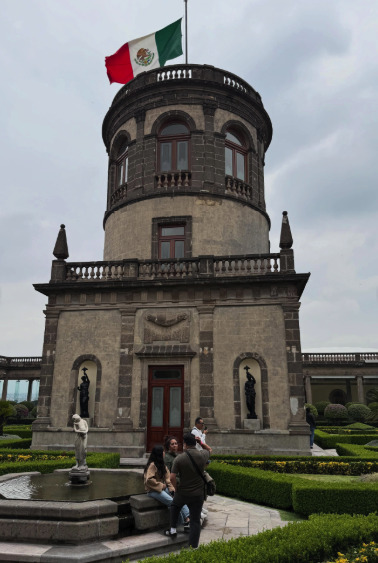
Your guide begins not inside the castle but on the hill itself — establishing that Chapultepec (Hill of the Grasshopper in Nahuatl) was a sacred ceremonial site for Aztec rulers from at least the 14th century. The natural springs supplied water to Tenochtitlán via aqueduct; Moctezuma I had his portrait carved into the rock face around 1467. The hill's importance is not incidental to the castle built on top of it — it explains why the Spanish considered it worth building on at all.
Viceroy Bernardo de Gálvez commissioned the present structure in 1785 — and died in 1786 under circumstances that remain suspicious, leaving the building unfinished. It sat largely unused until the early 19th century, when the Colegio Militar (Military College) moved in. The colonial period is covered relatively quickly: its significance is mostly what it sets up for what follows.
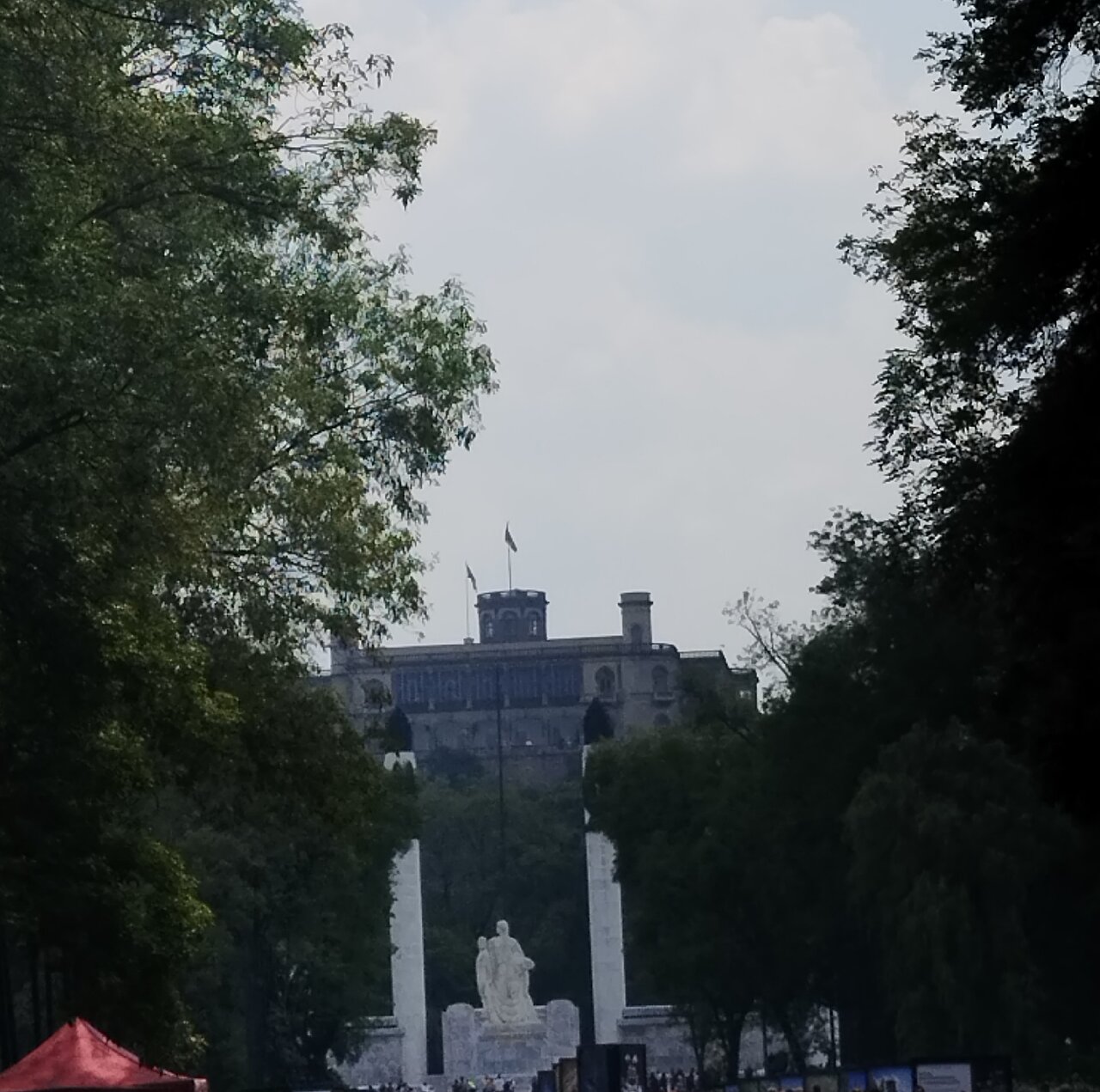
The Battle of Chapultepec during the Mexican-American War is the event that most dramatically shaped how Mexicans remember this hill. Your guide explains what happened — US forces storming the hill, the military cadets defending it, the six who died — and then the more interesting question: how the story became a national myth, why it was mythologised, and what it has meant to subsequent Mexican governments. The Monumento a los Niños Héroes at the base of the hill is both a memorial and a piece of political theatre — your guide explains both dimensions.
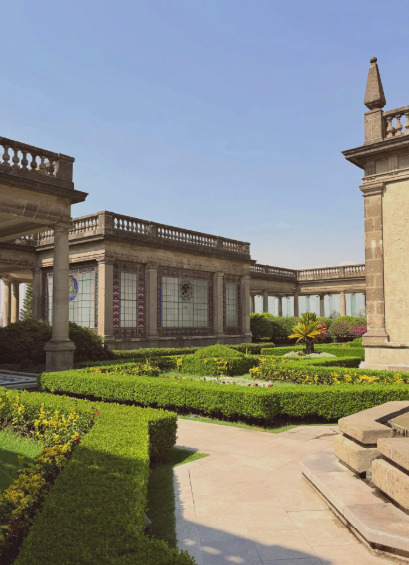
The most visually rich period — and the one most represented in the rooms you walk through. Your guide covers who Maximilian and Carlota were (Habsburg archduke and Belgian princess), why they were installed as emperor and empress (Napoleon III's ambitions and conservative Mexican elites' invitation), what they actually did to the castle (extensive renovation including the French stained-glass windows and the road that became Paseo de la Reforma), and why the empire collapsed so quickly (republican resistance, US pressure on France, Maximilian's political miscalculations). You visit Carlota's rooms — including her piano, still in place — and Maximilian's library and bedroom. The carriage room's central juxtaposition (Maximilian's gilded European coach versus Juárez's deliberately plain republican vehicle) is one of the tour's clearest moments.
After Maximilian's execution, the castle passed through several presidential administrations — most significantly Porfirio Díaz's 35-year tenure. Your guide covers what Díaz added (the south wing, electricity, diplomatic entertaining spaces) and what the Revolution of 1910 meant for the building's symbolic status. The mural programme — Siqueiros, O'Gorman, Orozco — is understood not as decoration but as explicitly political art commissioned to give the post-revolutionary museum a visual argument about what Mexico is and where it came from. President Cárdenas's decision in 1939 to vacate the castle and convert it to a public museum is the final chapter: a political act that itself carried meaning about what kind of republic Mexico was trying to become.
The Monumento a los Niños Héroes, located in Bosque de Chapultepec on the path between the Chapultepec metro station and the base of the hill. The monument is visible from the main park path — six curved stone columns surrounding a central eagle figure.
Metro: Line 1 (Pink) to Chapultepec station. Exit toward Bosque de Chapultepec — the monument is a 5-minute walk from the station exit, following the main park path toward the hill. The monument is clearly visible before you reach the ticket booth.
Hector is a genuinely exceptional guide. The chronological structure is the thing that made the difference for us — we'd been to the castle once before and found it interesting but disconnected. With this tour, every room built on the previous one. By the time we reached the murals, we already understood what Siqueiros was arguing politically because we'd just been through the Porfiriato rooms. That's exactly what a guided tour should do.
We started at the monument with the Niños Héroes story — which I already knew — but the guide framed it in a way I hadn't encountered before: less about the heroism of the individual cadets and more about how and why the story became a national myth, and what political purposes it served subsequently. That level of critical historical analysis, delivered clearly to a non-specialist audience, is genuinely rare.
Edwin is one of those guides who clearly thinks about his work between tours — he has strong opinions about Mexican history, backs them up, and isn't just delivering a script. The small group format meant we could have a real conversation about some of the contested interpretations, which is what history tours should feel like. Three hours felt very short.
See all verified reviews and photos on the booking page → or our full reviews page.
The chronological structure. Most tours visit rooms in the order they're physically arranged inside the castle. This tour visits them in the order that makes historical sense — following Mexico's timeline forward — which means each space you enter has been contextualised by everything that came before it. The experience is closer to following a story than walking through a building.
No. The 210 MXN castle admission is purchased at the ticket booth at the base of the hill at the start of the tour. Budget approximately $10 USD per person in addition to the tour price.
Yes — your group only. You will not be joined by other visitors. The guide's attention and the pace of the tour are entirely determined by your group.
No. This tour covers Chapultepec Castle and the Bosque de Chapultepec grounds only. For a combined castle and museum tour, see the Early Access Combo Tour.
Many visitors specifically book this tour on a second visit to Mexico City for exactly this reason. The castle doesn't change between visits — but a guide who structures the whole experience as a historical chronology makes the rooms read completely differently from a self-guided visit.
Private guide · Full 500-year story · Free cancellation up to 24 hours
Book This Tour — From $52 →